
Enrichment does not need to be complicated to be useful. The best starting point is the pet in front of you: their energy, preferences, confidence, age, space, and the kinds of activities they already enjoy.
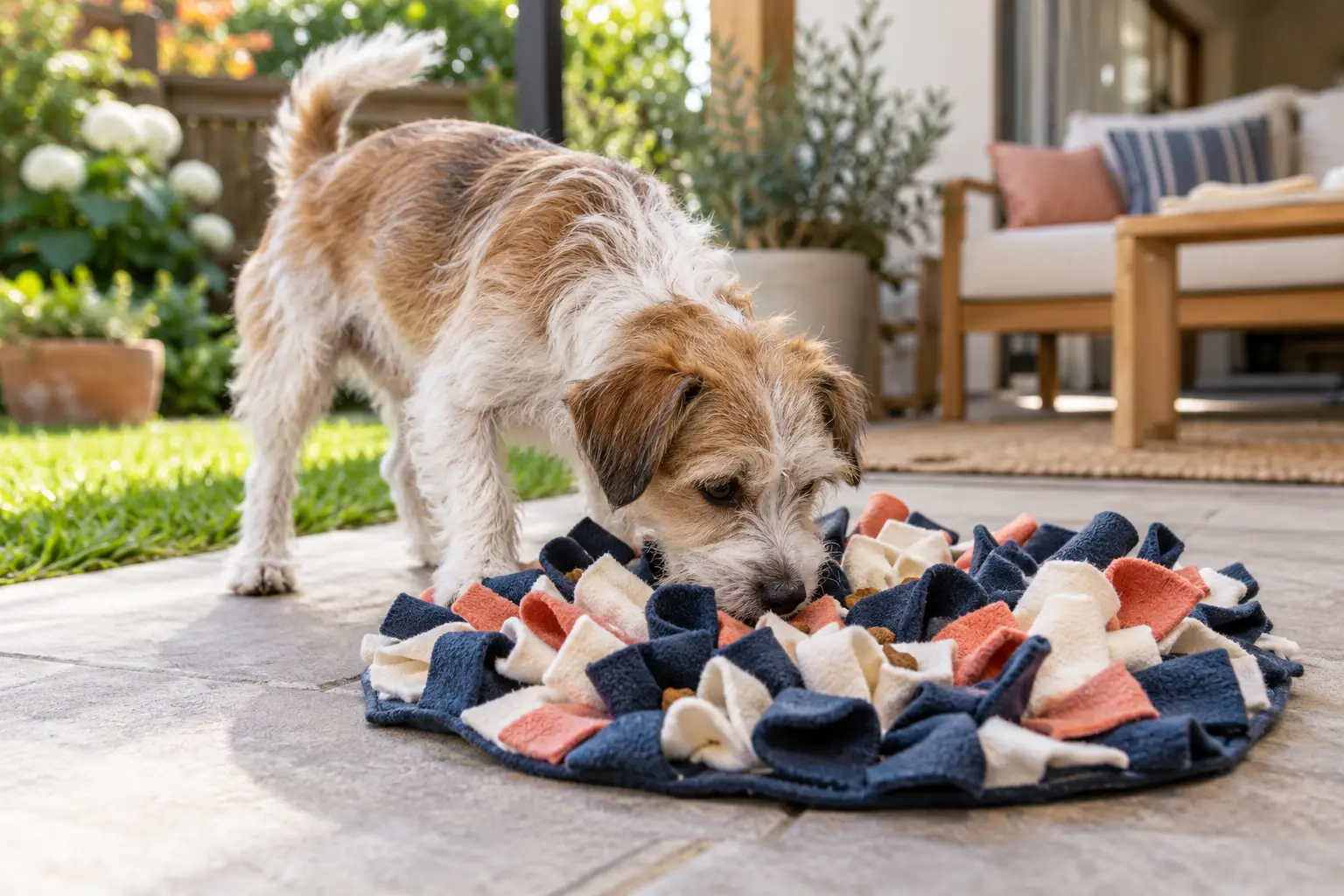
Enrichment works best when it fits your pet
A good activity gives your pet something appropriate to explore, practise, or focus on. It should feel achievable, offer a little variety, and fit naturally into your day.
Read the energy in front of you
Before choosing an enrichment idea, notice what your pet is asking for. Energy can change from one day to the next, so use your pet’s current behaviour as a guide rather than chasing a fixed label.
- A pet who is restless may enjoy a short search or movement-based activity.
- A pet who is cautious may prefer a familiar activity with an easy first step.
- A pet who loses interest quickly may do better with brief sessions and simple variety.
- A pet who enjoys settling may prefer calm sniffing, licking, or problem-solving activities.
Choose an enrichment starting point
Sniffing and searching
Hide a few familiar treats or pieces of your pet’s usual food in easy-to-find places, or use a simple scatter-feeding game where appropriate. Start openly so your pet understands the idea, then make the search slightly more interesting.
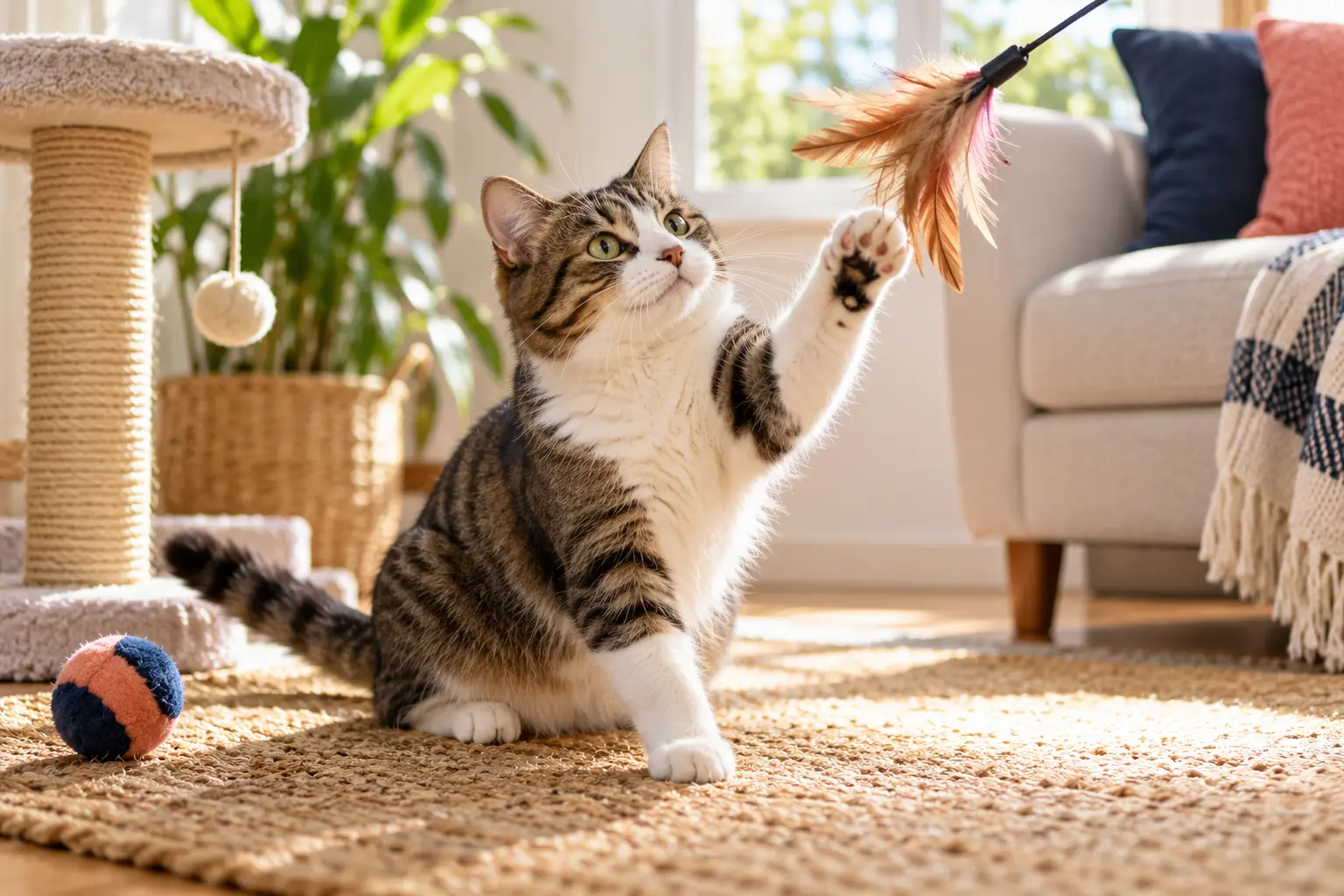
Movement and play
Use short bursts of play that match your pet’s size, confidence, and physical ability. Pause while the activity is still enjoyable and give your pet time to settle afterwards.
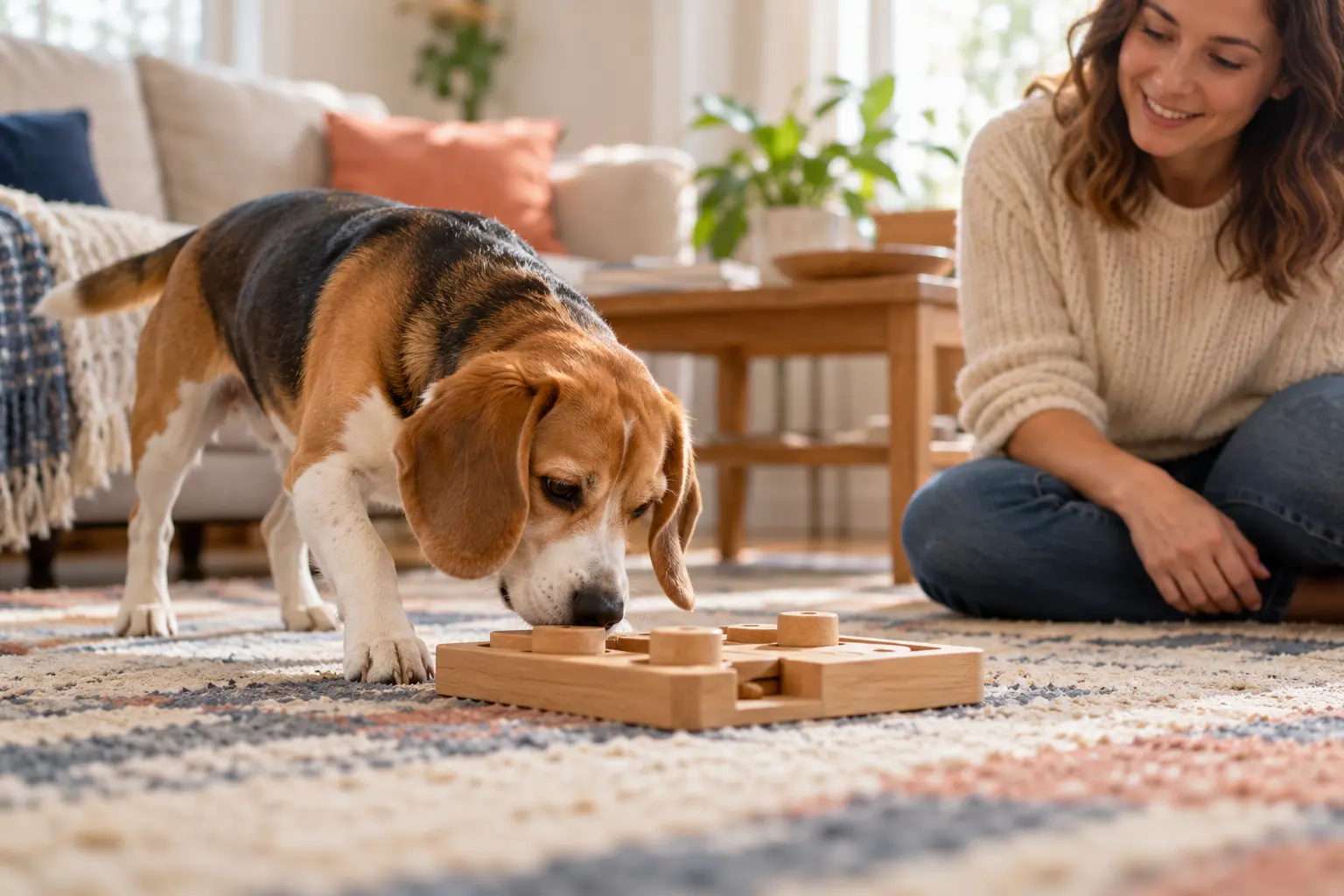
Problem-solving
Offer a simple puzzle or food-based activity that your pet can understand without frustration. The aim is to create a rewarding challenge, not to make the task difficult for its own sake.
Calm focus
Some pets enjoy activities that slow the pace down. A quiet grooming moment, a safe chew suited to the pet, or a relaxed training game can add useful focus to the day when high-energy play is not the right fit.
Make the challenge feel achievable
When an activity is new, make the first version easy. You can add complexity gradually once your pet understands what to do.
- Show your pet how the activity begins.
- Keep the first session short.
- Use familiar rewards and a calm tone.
- Offer a simpler version if your pet walks away or becomes frustrated.
- Stop while your pet is still engaged, then try again another day.
Keep play safe and sustainable
- Supervise new toys, puzzles, and food-based activities until you understand how your pet uses them.
- Remove anything that becomes damaged or develops loose pieces.
- Use food that fits your pet’s normal diet and account for treats as part of the day’s intake.
- Choose activities that suit your pet’s age, size, confidence, and physical ability.
- Rotate a few appropriate options instead of presenting everything at once.
Good to know
There is no single best enrichment activity for every dog or cat. Follow your pet’s signals, keep the challenge manageable, and choose ideas you can repeat safely. If you are unsure whether an activity suits your pet, ask a qualified veterinary or animal-care professional.